What Harvard Medical School Experts Want You to Know About Acupuncture for Pain
By Yutoku Yakuhin··5 min read

Summarised from Harvard Health Publishing's article "Acupuncture for pain relief: How it works and what to expect" (August 25, 2025), which was adapted from the Harvard Medical School special report Pain Relief Without Drugs or Surgery. This is our own summary for general education — not medical advice, and not an endorsement by Harvard.
Acupuncture Isn't Just for Back Pain
Acupuncture is one of the oldest pain treatments still in everyday use, and Harvard's editors list a long run of conditions it has been used for:
- Low back pain
- Shingles and other nerve pain
- Hand and knee pain
- Headaches
- Fibromyalgia
- Menstrual pain
If you've been curious but unsure what actually happens, here is what Harvard says about how it's meant to work, what a course of treatment looks like, and what to check before you book.
How Acupuncture Is Thought to Work
There are two explanations, and Harvard presents both.
The traditional view. In traditional Chinese belief, energy called qi flows through 12 channels, or meridians, running lengthwise through the body. Fine needles are placed at specific "acupoints" along those channels to influence that flow.
The scientific view. Some research suggests that needling may relieve pain by prompting the release of endorphins, the body's natural painkillers, and may also affect the part of the brain that regulates serotonin, a chemical involved in mood.
Related to this is acupressure, which uses no needles at all. A practitioner applies deep pressure with a finger or thumb to acupressure points instead.
Not All Acupuncture Is the Same
Technique depends on the tradition and the practitioner. Harvard describes three common styles:
- Chinese acupuncture. The practitioner may twirl the needles slightly, or add heat or electrical stimulation. Some also use moxibustion, burning the herb mugwort near the needle tips or over certain areas. In the U.S. the mugwort is usually burned near the skin rather than touching it.
- Japanese acupuncture. Needles go in more shallowly than in the Chinese style, and they usually aren't manipulated once in place.
- Korean acupuncture. Focuses on points in the hands and feet only.
What Happens at an Appointment
A typical first visit looks like this:
- Conversation. The acupuncturist asks about your pain, other symptoms, and your medical and family history.
- Examination. They may do a physical exam, take your pulse, and press on different areas to find swelling or sensitivity.
- Needling. Acupuncturists take a holistic approach, so treatment often addresses whole-body imbalances as well as your main complaint. They usually place four to 10 needles and leave them in for 10 to 30 minutes while you rest.
- A course of sessions. A usual course is six to 12 sessions over about three months.
Is It Safe?
Harvard describes the complication rate as quite low.
- Minor side effects: pain, bruising, or bleeding where a needle went in.
- Less common: skin infections have been reported.
- Blood-borne infection: single-use, sealed needle packages have all but eliminated the risk of infections such as hepatitis B or HIV.
What Does the Research Say?
Harvard points to two studies:
- A study in The Journal of Pain pooled 39 studies involving nearly 21,000 people who received real acupuncture, simulated acupuncture, or none, for osteoarthritis, headaches, or chronic back, neck, or shoulder pain. Real acupuncture gave the greatest pain relief, and the benefit lasted at least a year.
- A 2021 study in Advances in Therapy found acupuncture can help with low back pain for up to two years after treatment.
How to Find a Good Acupuncturist
Harvard's advice is to choose an experienced practitioner, because licensing rules differ from state to state.
- Check credentials. Where a state has no licensing requirement, look for certification from the National Certification Commission for Acupuncture and Oriental Medicine (NCCAOM).
- Ask your doctor. Some physicians practise acupuncture themselves, and others can refer you.
- Check your insurance. Insurers increasingly cover acupuncture for conditions such as low back pain.
Where Press Needle Patches Fit In
Everything above describes acupuncture delivered by a trained practitioner. A press needle patch is a different product, and the research Harvard cites was not done on it.
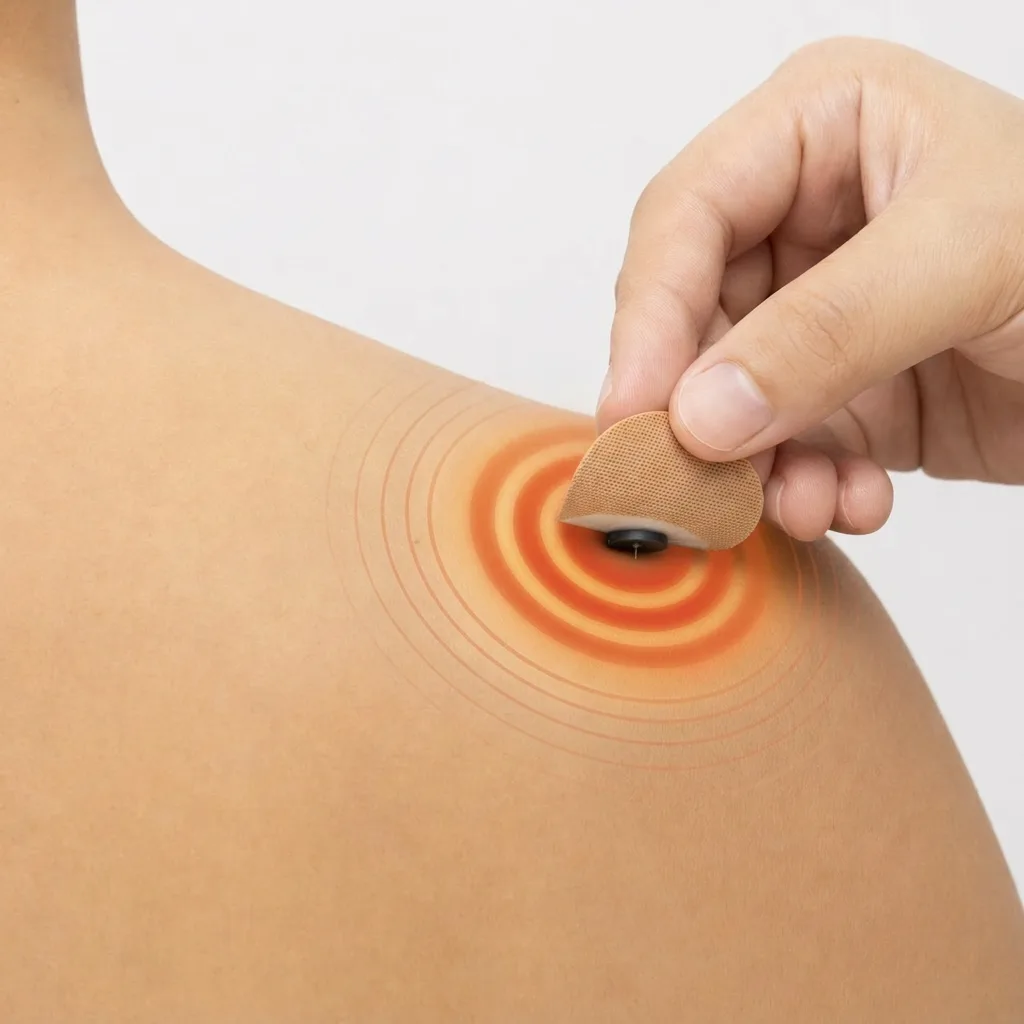
Press needle patches come from the Japanese tradition. Instead of needles that are placed and removed in a clinic, a patch has a single, very short needle on a small adhesive disc, worn on the skin and replaced every few days. SPOLBAN is one example, made in Japan by Yutoku Yakuhin Kogyo (founded 1952). It is meant for everyday muscle stiffness, not for treating a medical condition.
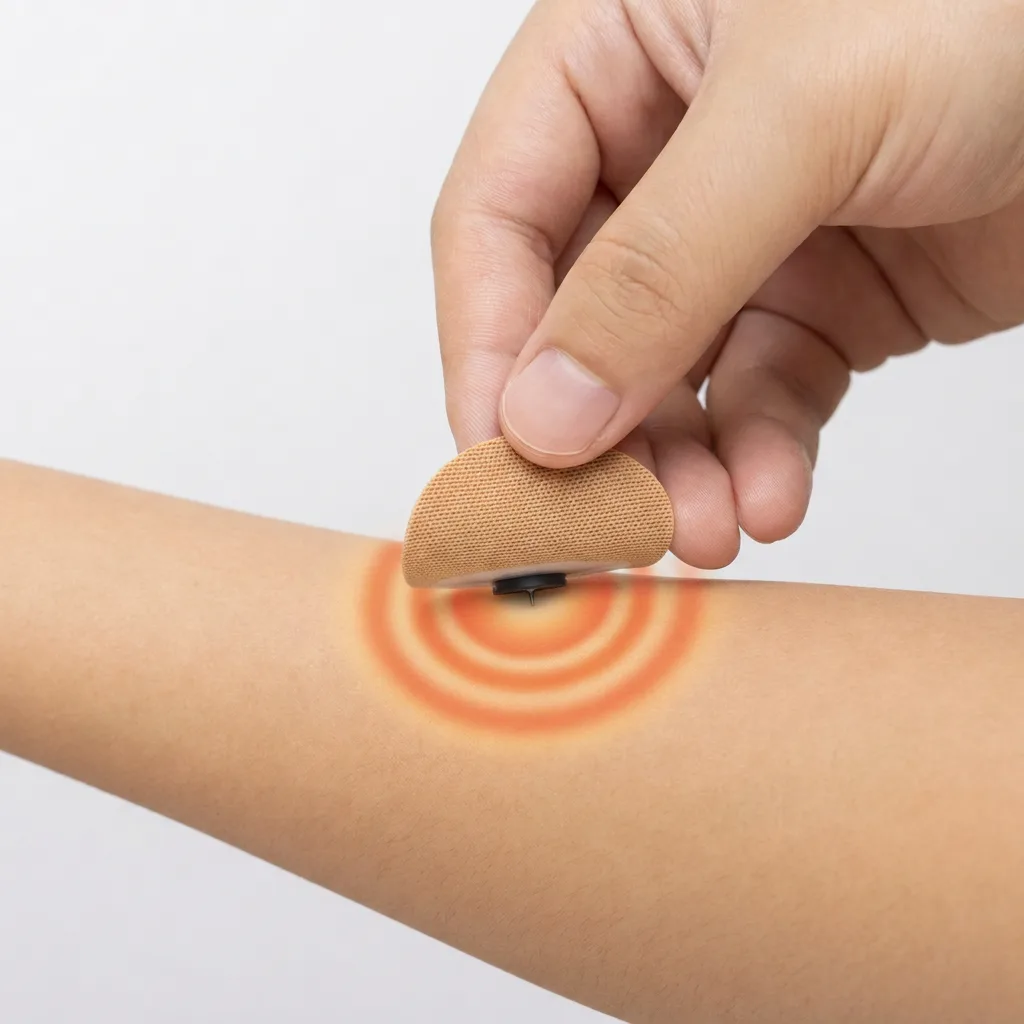
If you're considering one, check the safety information and instructions first. The usual cautions apply: avoid it if you have a metal or adhesive allergy, are pregnant, or have an implanted electronic device such as a pacemaker. And if pain is severe, keeps getting worse, or comes with numbness or weakness, see a clinician rather than self-treating.
You can learn more about the product on the SPOLBAN home page.
The Takeaway
Harvard's summary is cautiously positive: acupuncture has research behind it for several kinds of chronic pain, its complication rate is low, and results can last. Plan on a course of sessions rather than a single visit, and choose a qualified, certified practitioner.
Source: Harvard Health Publishing, "Acupuncture for pain relief: How it works and what to expect," August 25, 2025, adapted from Pain Relief Without Drugs or Surgery, Medical Editor Melissa L. Colbert, MD, Harvard Medical School. Harvard Health notes that its content should never replace direct medical advice from your doctor or another qualified clinician.