4 Signs Your Neck Is Actually Healing, Even If Your Scan Hasn't Changed
By Yutoku Yakuhin··6 min read

Your Scan Isn't the Whole Story
I'm Dr. Qing, and this is the traditional Chinese medicine (TCM) way of looking at neck recovery. A situation that comes up all the time goes like this: someone returns for a follow-up and says, "My neck feels so much lighter. I used to get dizzy every time I looked down and now it's much better. But my scan hardly looks different. Should I keep going?"
Many people stare at the imaging report, the bulge or the degeneration, and ignore what their own body is telling them. Strained neck muscles and sluggish circulation in the channels don't build up overnight, so they don't clear overnight either. As the tissues slowly recover, the body gives clear, practical feedback.
Here are four changes that show up when a neck condition is moving in the right direction. The more of them you notice, the better the sign.
1. Your Neck and Shoulders No Longer Fear the Cold
For many people with neck problems, the neck and shoulders feel permanently wrapped in a cold, damp cloth. A blast of air conditioning or a cold wind and they seize up immediately, with a heavy, aching feeling across the shoulders.
Traditional Chinese medicine explains it this way: the channels around the neck and shoulders sit close to the surface, and after long hours with the head bowed, the muscles stay tense. Wind, cold, and dampness can then settle in. Cold causes tissue to contract, which brings stiffness and pain. That's why neck trouble so often flares up after a chill.
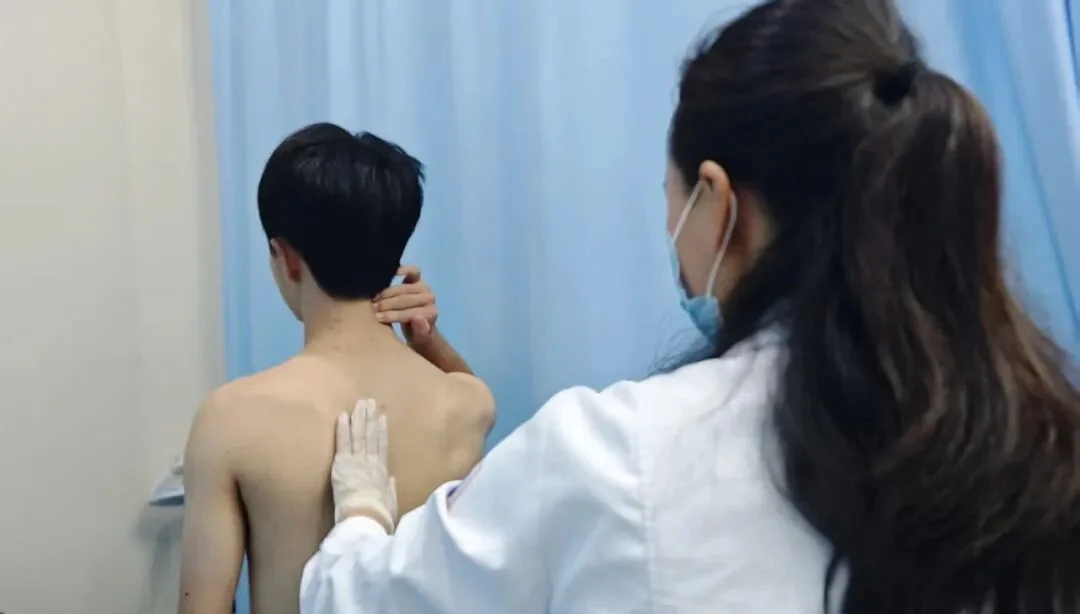
What improvement looks like:
- A bit of cool air no longer makes your neck lock up.
- The heavy feeling across the shoulders lightens.
- Turning or lowering your head no longer brings a pulling pain.
In TCM terms, the tissues are loosening and the cold and dampness are clearing. This is the first stage of care: warming the channels and easing the sinews.
2. The Shooting Arm Pain Eases
Neck problems aren't always only about the neck. The pain can travel from the shoulder down the arm, often worse when lying down at night, and in bad cases it hurts even to lift the arm. TCM describes this as long-standing blockage in the channels: qi and blood get stuck partway and can't nourish the muscles of the arm, so the pain "runs" along it.
What improvement looks like:
- The waves of pain running down the arm become less frequent.
- You're no longer woken at night by an aching arm.
- Lifting your arm or carrying something light no longer drags on the neck and shoulder.
This suggests the smaller collateral channels are gradually opening. It's the second stage: clearing the channels and relieving pain.
3. Your Mood Settles and You Sleep Better
Less obvious, but important: in TCM thinking, a neck condition that keeps coming back is connected to stagnation of qi. The neck is a major route for the rise and fall of qi. When it's blocked, the qi gets stuck above, and a person can feel irritable and have trouble falling asleep, tossing and turning at night.
Poor sleep then makes the neck and shoulder pain worse, which makes sleep worse, and the cycle repeats. Without proper rest, the muscles around the whole spine never get a chance to recover, so problems keep returning.
What improvement looks like:
- You fall asleep more easily.
- You're not woken repeatedly by neck discomfort.
- You feel less irritable for no particular reason.
When the flow of qi is smoother and the tissues can rest, one of the main triggers for relapse falls away. This is the third stage: smoothing the flow of qi and breaking the cycle.
4. You Recover Faster After a Long Day
People with weak necks often find that a busy day or a long stretch on the phone leaves them aching for days. They tire easily and feel run down.
TCM says the spine relies on zheng qi, the body's supportive vitality, to hold it up. When that's low, the muscles can't hold the neck steady, and a little overwork brings the problem back.

What improvement looks like:
- After a long stretch at your desk you feel only a mild ache.
- A night's rest is enough to bounce back, instead of several days of discomfort.
- Your stamina is better overall.
This means the muscles around the spine are getting stronger and protecting the neck, so it's less likely to flare up every time you overdo it. This is the final stage: building a stronger foundation.
How the Four Signs Fit Together
They build on each other, from the outside in:
- Less fear of cold, less tightness → cold and dampness are clearing.
- Less arm pain → the channels are opening.
- Better sleep and mood → the flow of qi is smoother.
- Faster recovery after exertion → vitality is building up.
If you notice one or two, your approach is likely on track. If all four are gradually improving, the chance of relapse falls noticeably.
An important point: changes on a scan often lag behind how you feel. How your body feels day to day is the most direct yardstick, though it doesn't replace an examination and imaging when a clinician needs them.
When to See a Doctor Straight Away
Feeling better is the goal, but some symptoms mean you should stop self-managing and get checked promptly:
- Clumsy hands, or trouble with buttons or chopsticks
- Unsteady walking or a "walking on cotton" feeling
- Changes in bladder or bowel control
- Numbness or weakness that keeps getting worse, or muscle wasting
- Numbness or weakness in the legs as well
- New neck pain after an injury
Numb fingers in particular can have causes outside the neck. Our guide to which nerve root is behind numb fingers explains how clinicians sort it out.
A Note From Dr. Qing
Living with neck trouble is exhausting. People worry that it will keep getting worse, or that it will disrupt everyday life, and those worries are very common. What I want you to take away is that how you feel is a real measure of progress, even when a scan looks unchanged.
If you're not sure which pattern fits you, speak to a licensed practitioner who can examine you in person and tailor the approach to you.
Give Your Neck and Shoulders Everyday Support
SPOLBAN is a Japanese press needle patch made by Yutoku Yakuhin Kogyo, a pharmaceutical company founded in 1952. Each small, drug-free patch has a single sterile 1.1 mm needle and is worn under clothing for 2–3 days, to help with everyday muscle stiffness in the neck, shoulders and back. Every order is backed by a 30-day money-back guarantee.